



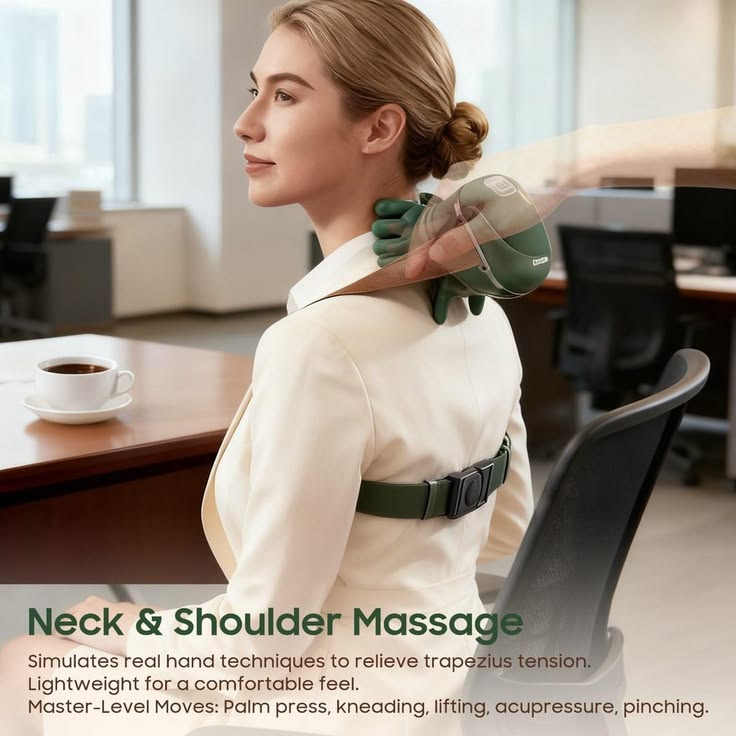
Chronic muscle tension in the neck, shoulders, and upper back is one of the most persistent discomforts in modern life. Long hours of sitting, screen exposure, and stress-related muscle guarding keep the trapezius and cervical muscles in a near-constant state of contraction. Over time, this leads to stiffness, reduced mobility, and the formation of deep trigger points.
4D palm and thumb simulation technology represents a significant advancement in personal massage devices because it attempts to replicate the complex, layered pressure patterns of human hands Hand Simulated Neck shoulder massager. Unlike simple vibration or fixed kneading, it introduces variability in depth, rhythm, and direction that closely mirrors professional massage techniques.
Why Chronic Tension Is So Difficult to Release
To understand why advanced simulation matters, it helps to understand how chronic tension develops.
Continuous Low-Level Muscle Activation
Even when sitting still, postural muscles in the neck and shoulders remain active to support the head. This creates constant micro-strain.
Trigger Point Formation
When muscles are overworked and under-recovered, localized knots form. These trigger points restrict blood flow and cause stiffness or referred pain.
Nervous System Guarding
Stress causes the body to maintain a semi-contracted state, especially in the trapezius region. This “guarding” response makes muscles resistant to simple relaxation methods.
What 4D Palm and Thumb Simulation Means
4D simulation refers to mechanical systems that replicate human hand movements with added time-based variation.
Palm Simulation
Palm-like motion distributes pressure across a wider surface area, similar to how a therapist uses the heel of the hand to apply broad compression.
Thumb Simulation
Thumb-like motion delivers concentrated, targeted pressure to small, tight areas—especially trigger points.
The “4D” Element
The fourth dimension refers to dynamic variation over time, including:
- Changes in speed
- Shifts in pressure intensity
- Alternating movement patterns
- Variable depth control
This prevents repetitive stimulation and improves muscle response.
The Science of Why Human-Like Pressure Works Better
Muscles respond differently to human-like motion compared to static or repetitive stimulation.
Mechanical Pressure vs. Surface Vibration
- Vibration stimulates surface nerves
- Palm and thumb pressure engages deeper muscle layers
Deeper engagement is essential for chronic tension relief.
Tissue Compression and Release
Human-like kneading alternates between compression and release, which helps:
- Increase blood circulation
- Break down tight muscle fibers
- Encourage relaxation of contracted tissue
Neuromuscular Response
The nervous system interprets varied pressure as more natural, reducing defensive muscle tightening.
How 4D Technology Mimics Palm and Thumb Techniques
Modern devices combine engineering precision with biomechanical modeling.
1. Multi-Point Contact Systems
Multiple nodes simulate the spread of a palm while smaller points replicate thumb pressure.
Effect on Muscles
This combination allows both broad relaxation and targeted knot release.
2. Depth-Controlled Pressure
4D systems adjust how deeply nodes penetrate muscle tissue.
Why Depth Matters
- Surface pressure relaxes general stiffness
- Deeper pressure reaches trigger points
3. Variable Rhythm Patterns
Instead of repetitive motion, the device changes speed and intensity throughout the session.
Human-Like Benefit
This mimics how a therapist naturally adjusts technique based on muscle response.
4. Alternating Directional Movement
Nodes may shift direction to simulate real hand repositioning.
Effect
Prevents adaptation and maintains muscle responsiveness.
Why 4D Simulation Is Effective for Chronic Tension
Chronic tension requires more than surface-level relaxation.
Reaching Deep Muscle Layers
4D systems are designed to penetrate beyond superficial tightness into deeper muscle structures.
Breaking Persistent Knots
Thumb-like pressure focuses energy on trigger points, helping release long-held tension.
Improving Circulation in Restricted Areas
Alternating pressure helps restore blood flow to tight, under-oxygenated muscle tissue.
The Role of Heat in Enhancing 4D Massage
Heat therapy significantly improves the effectiveness of 4D systems.
Muscle Softening
Warm muscles become more flexible and responsive to deep pressure.
Faster Tissue Relaxation
Heat accelerates the breakdown of stiffness in chronic tension areas.
Reduced Discomfort During Deep Massage
Warmth reduces resistance from sensitive muscle fibers.
Why the Nervous System Responds Better to 4D Motion
Relaxation is not just physical—it is neurological.
Reduced Predictability
The brain responds more positively to varied, human-like movement patterns.
Safety Signal to the Body
Natural-feeling motion helps the nervous system shift into a relaxed state.
Lower Muscle Guarding
When stimulation feels organic, muscles are less likely to contract defensively.
Key Benefits of 4D Palm and Thumb Simulation
1. More Effective Knot Release
Targeted thumb-like pressure helps break down stubborn trigger points.
2. Deeper Muscle Penetration
Reaches layers that vibration and basic kneading cannot effectively access.
3. Improved Long-Term Relief
Regular use reduces baseline tension levels over time.
4. More Natural Massage Experience
Feels closer to professional manual therapy.
Limitations to Keep in Mind
While advanced, 4D simulation is not identical to human therapy.
No Real-Time Intuition
Machines cannot fully respond to subtle muscle feedback like a therapist.
Fixed Mechanical Boundaries
Even adaptive systems are limited by physical design constraints.
Best Practices for Maximum Effectiveness
Start with Low Intensity
Allows muscles to adapt before deeper pressure is applied.
Use Heat First
Prepares tissue for deeper mechanical stimulation.
Focus on Short Sessions
10–15 minutes is typically enough for effective relief.
Maintain Consistency
Regular use is key to reducing chronic tension.
Final Thoughts
4D palm and thumb simulation represents one of the most advanced approaches to modern muscle recovery. By combining broad palm-like compression with precise thumb-like targeting and dynamic variation, it closely replicates the techniques used in professional massage therapy.
When applied correctly and used consistently, this technology can significantly reduce chronic tension, improve circulation, and restore comfort in the neck and shoulders. While it does not fully replace human touch, it offers a highly effective and accessible alternative for managing everyday muscle stress in a fast-paced lifestyle.
